
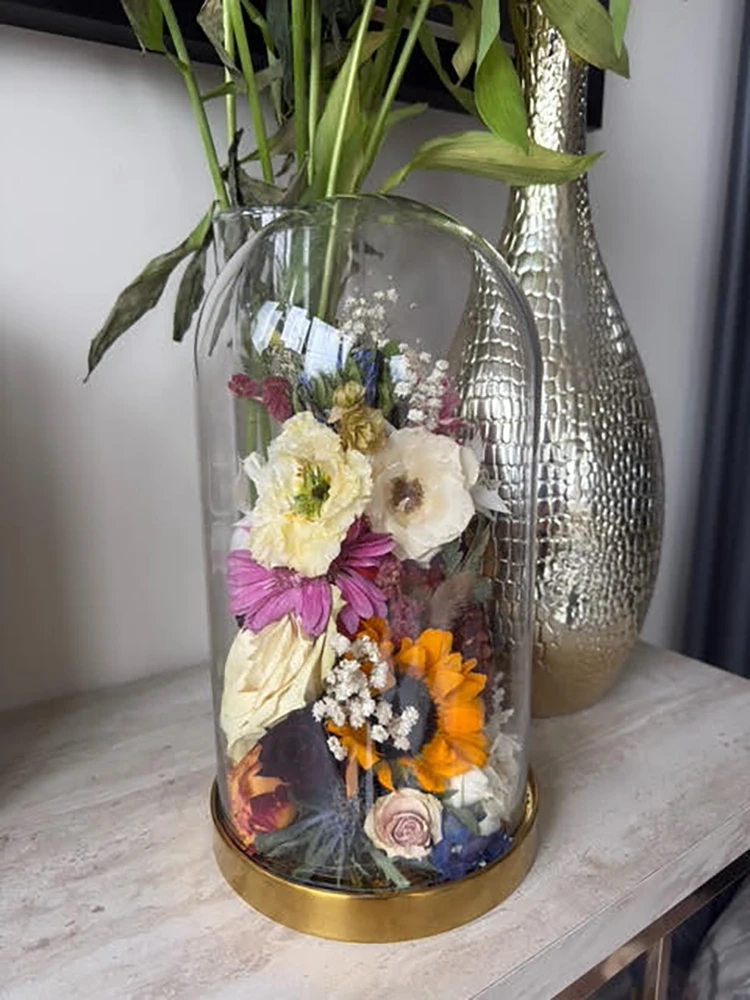
How I Dry Flowers Using Silica
How I Dry Flowers Using Silica — And Why It’s One of the Most Effective Preservation Methods
When preserving flowers, the way they are dried determines everything that follows — their colour, their structure, their longevity, and ultimately the quality of the finished piece.
There are several ways to dry flowers, but one of the most effective methods I use is silica drying. It allows blooms to retain much of their original shape and depth, making it particularly suited to flower preservation for resin keepsakes, jewellery, and framed pieces.
Here is a gentle look at how the process works — and why it’s so beneficial.
What Is Silica Drying?
Silica gel is a fine, sand-like material made from silicon dioxide. It is specifically designed to draw moisture out of organic materials quickly and evenly.
Unlike air drying — where flowers are hung upside down and left to dry naturally over weeks — silica works by surrounding the flower entirely and absorbing moisture from all sides.
This method helps:
- preserve three-dimensional form
- retain more natural colour
- reduce shrinkage
- minimise petal distortion
For delicate or sentimentally important flowers, this level of control makes a significant difference.
The Process — How Flowers Are Dried in Silica
Every set of flowers is assessed individually before drying begins. Different blooms respond differently, and preservation should never be rushed or standardised.
1. Preparation
Fresh flowers are carefully trimmed and cleaned of excess moisture or damaged petals. Timing matters — flowers preserve best when they are still relatively fresh, ideally within a few days of the event.
2. Placement in Silica
A layer of silica gel is poured into a sealed container. Each flower is placed gently on top, positioned in a way that supports its natural shape. More silica is then slowly poured around and over the bloom, ensuring it is fully surrounded without crushing the petals.
This stage requires patience. Silica must flow into the centre of the flower and between delicate petals without shifting their form.
3. Sealing and Waiting
The container is sealed to prevent moisture from re-entering. The silica then begins its work, gradually drawing moisture out of the flower.
Depending on the bloom type, this can take several days to over a week. Rushing this stage can lead to incomplete drying, which affects long-term durability.
4. Removal and Finishing
Once fully dried, the flowers are carefully lifted out and excess silica is removed with soft tools. At this stage, the bloom is dry, lightweight, and structurally intact — ready to be incorporated into resin, jewellery, or framing.
Why Silica Drying Is So Effective
Not all drying methods are equal. Silica offers several advantages that make it particularly suited to professional flower preservation.
Retains Shape and Depth
Unlike pressing, which flattens flowers, silica preserves the natural three-dimensional form. This is especially important for:
- roses
- peonies
- dahlias
- statement blooms
If a piece will be set in resin or displayed in a deep frame, maintaining depth is essential.
Preserves Colour More Effectively
While no method can completely stop natural colour changes, silica drying often preserves vibrancy far better than air drying. Whites remain cleaner, and bright tones tend to soften rather than brown.
This makes it ideal for wedding bouquet preservation and memorial flowers where colour carries emotional significance.
Reduces Mould Risk
Because silica removes moisture efficiently and evenly, it lowers the risk of mould or internal decay — something that can happen if flowers are dried too slowly or unevenly.
For keepsakes intended to last decades, this stability is important.
Suitable for Resin and Jewellery
When creating resin keepsakes or memorial jewellery, flowers must be completely moisture-free. Even a small amount of retained moisture can cause clouding or instability over time.
Silica drying ensures blooms are fully prepared before being set into resin, contributing to clarity and durability in the finished piece.
Are There Limitations?
Silica is highly effective, but it isn’t perfect — and honesty matters in preservation.
Some very delicate or moisture-heavy flowers may:
- become more fragile once dried
- deepen in colour
- shrink slightly
Natural change is part of working with organic materials. The aim is not to freeze flowers exactly as they were, but to honour their form in a stable, lasting way.
Why Drying Is the Most Important Stage
In many ways, drying is the foundation of the entire preservation process. If flowers are not dried correctly:
- resin may cloud
- petals may warp
- colour may deteriorate faster
- longevity may be compromised
Taking time at this stage ensures everything that follows is built on stability and care.
Silica drying allows that time and precision.
A Process Rooted in Patience
Flower preservation is not immediate. Silica drying alone requires careful preparation, monitoring, and handling. It cannot be hurried without consequence.
For many people, this slowness is reassuring. It reflects the intention behind the piece — that something meaningful is being treated with respect rather than speed.
Each bloom is handled individually. Each decision is made with longevity in mind.
Considering Flower Preservation?
If you are thinking about preserving wedding flowers, memorial blooms, or flowers from a meaningful occasion, understanding the drying process can help you feel more confident in the outcome.
Silica drying is one of the methods I use when it is best suited to the flowers and the final design. Every set of blooms is assessed carefully to ensure the most appropriate approach is chosen.
Preservation is not about perfection. It is about care, patience, and creating something lasting from something fleeting.
If you would like to explore flower preservation options, you are always welcome to get in touch — gently and without pressure.